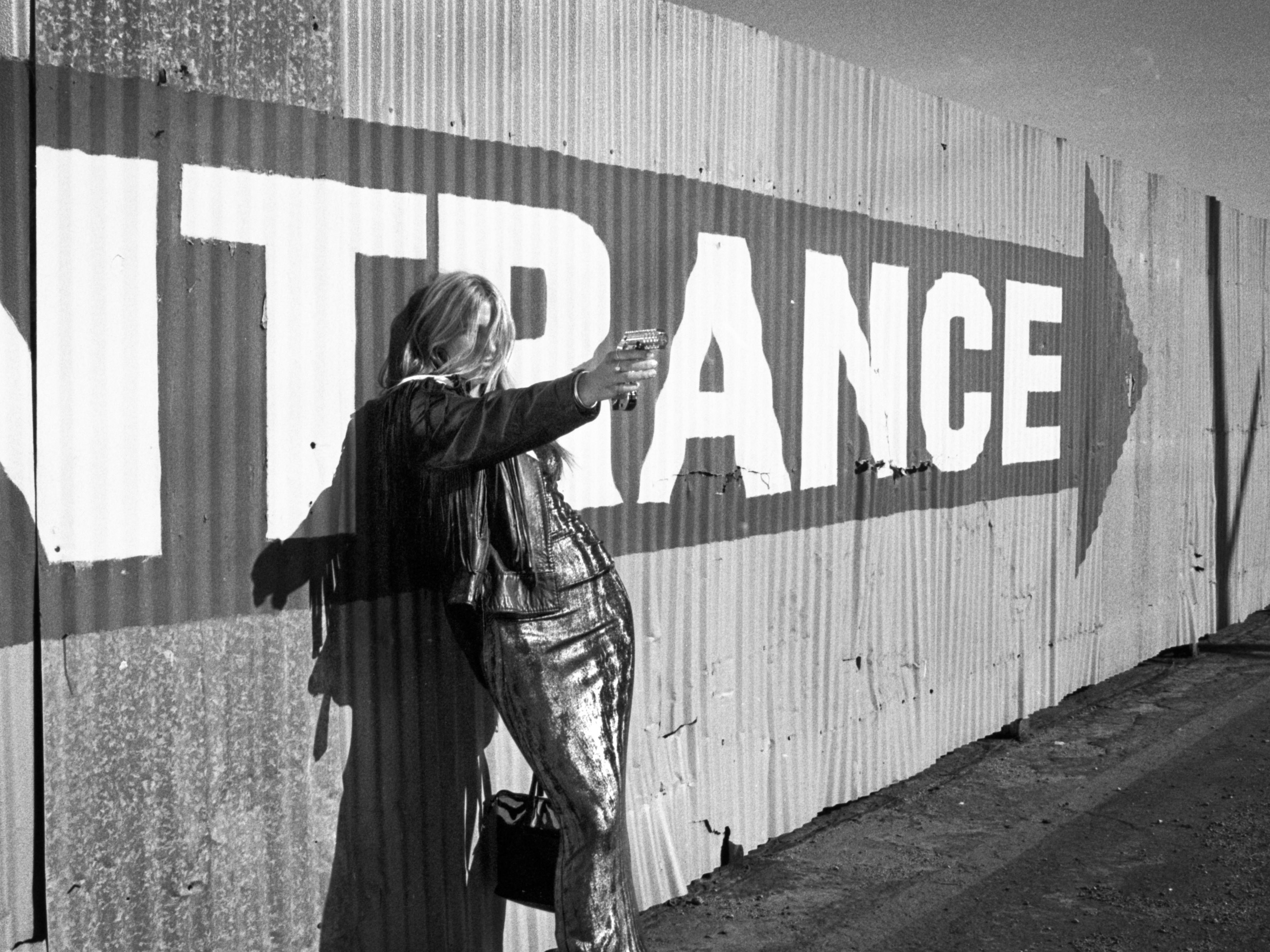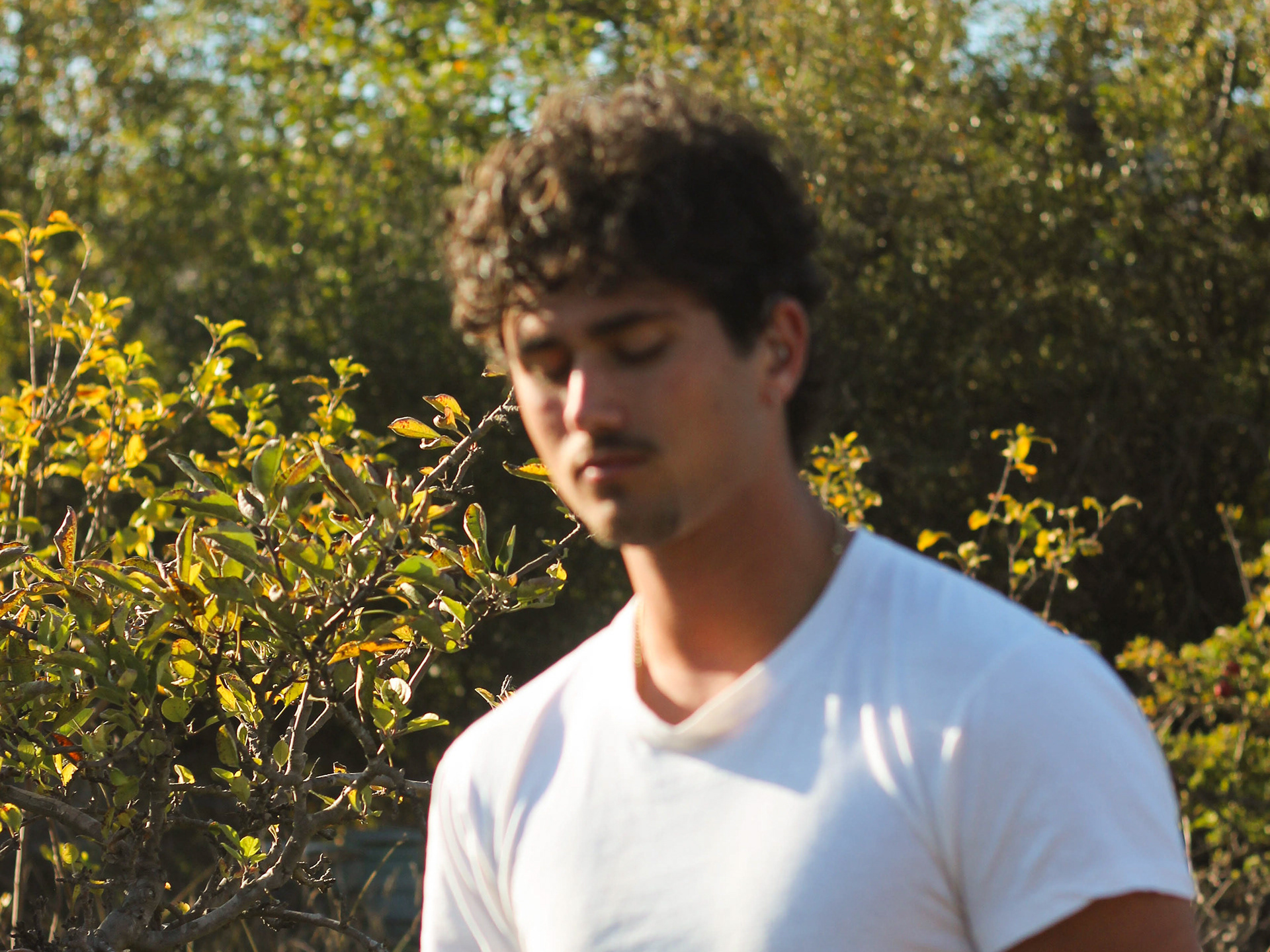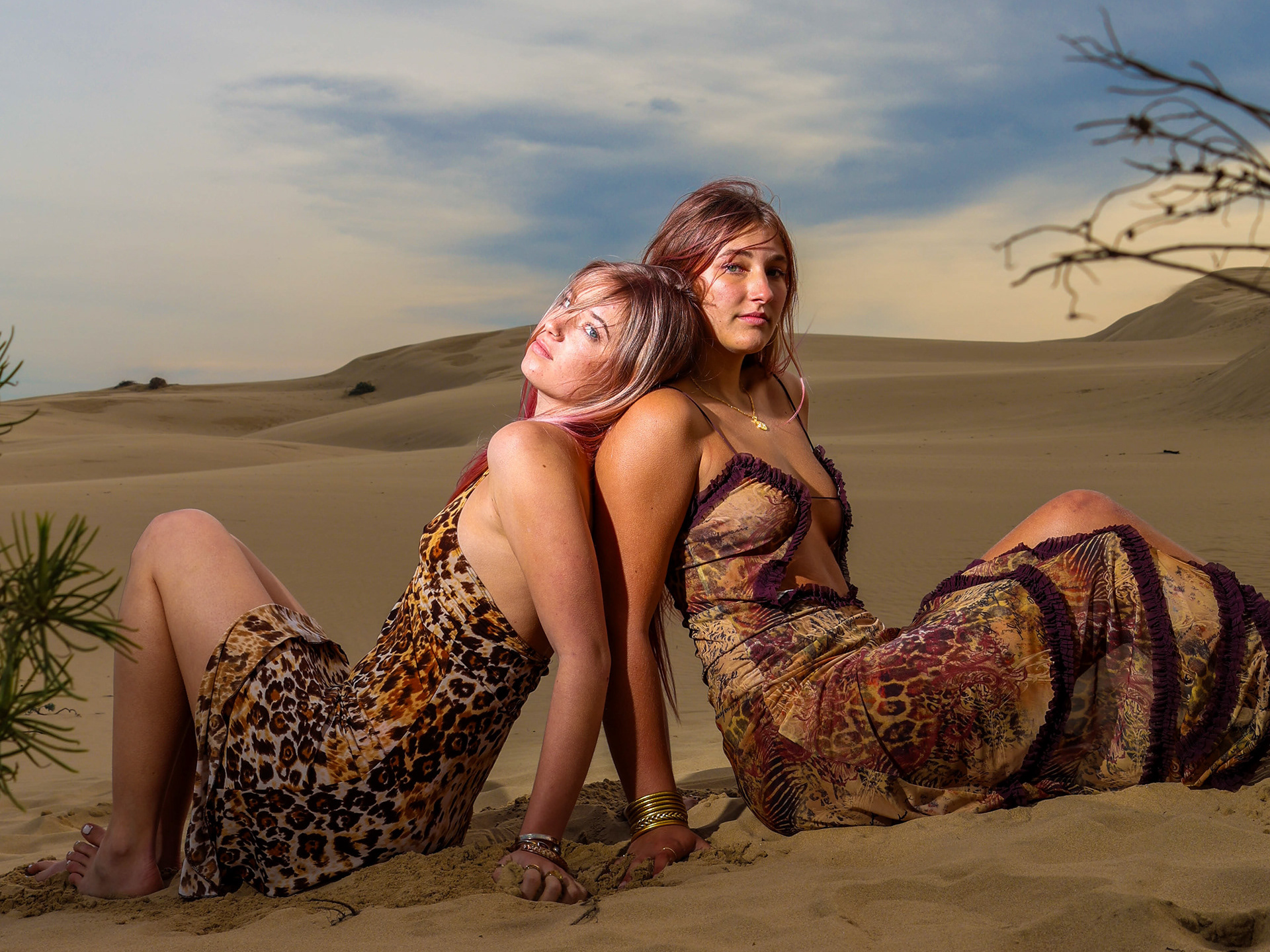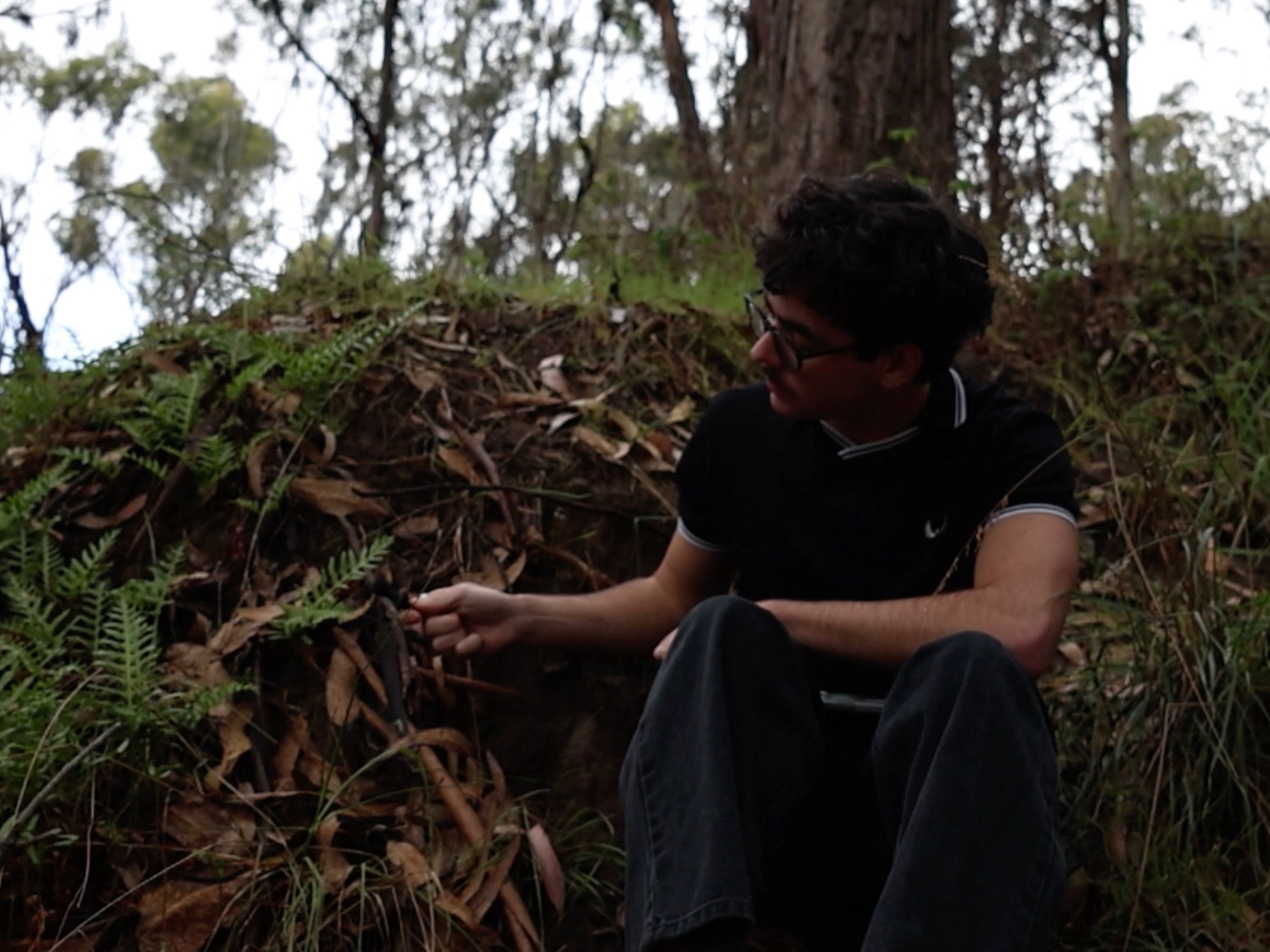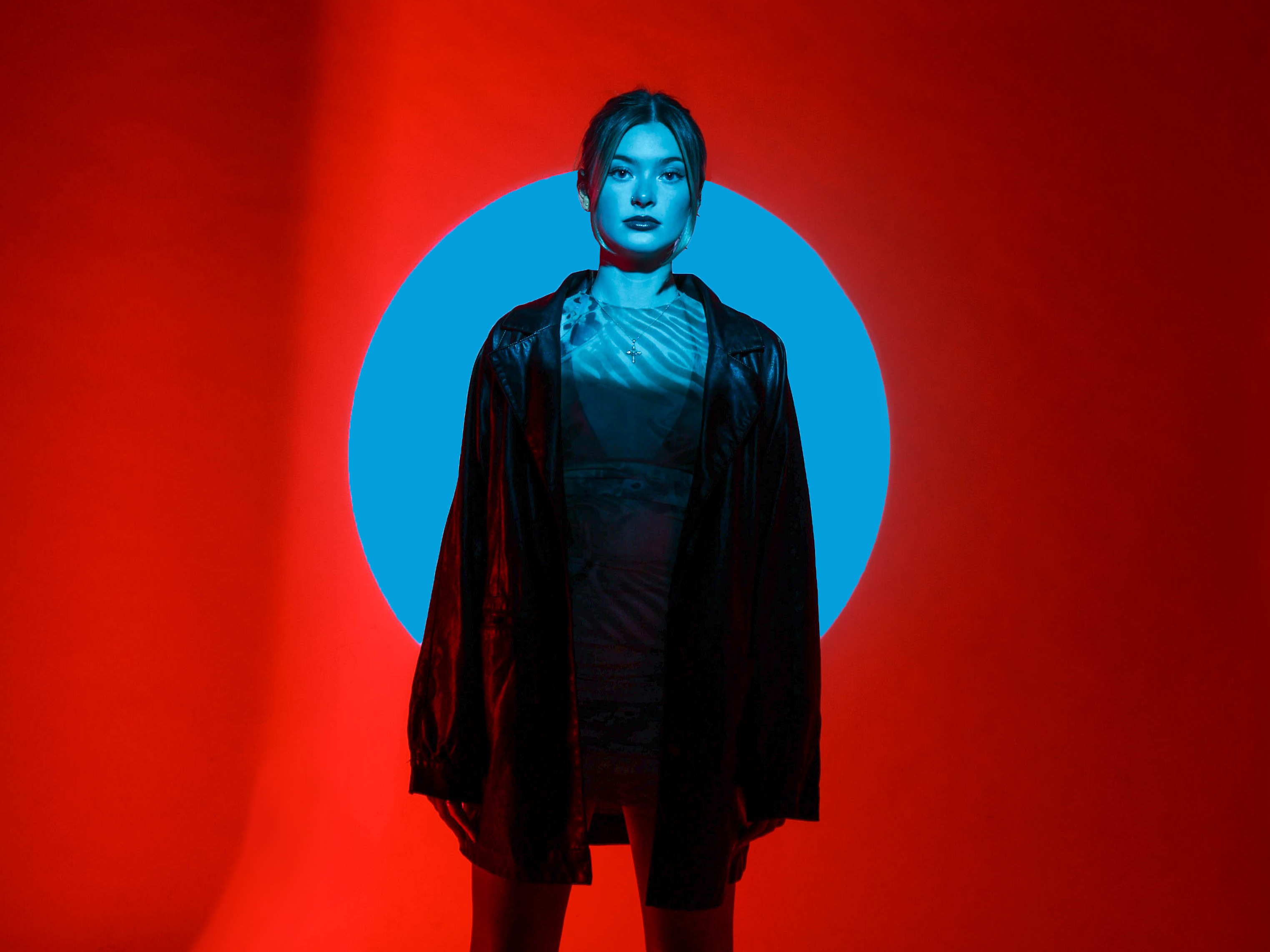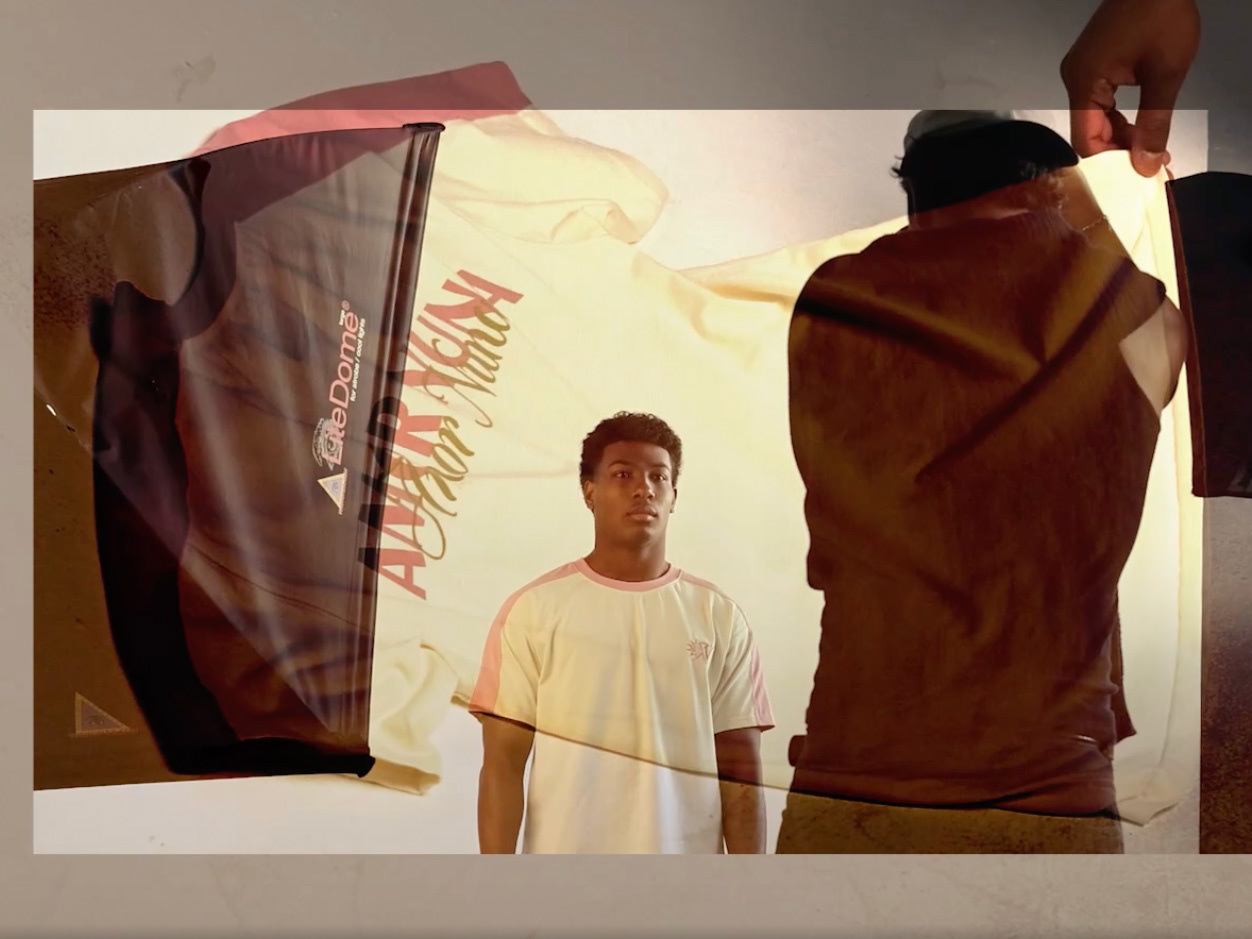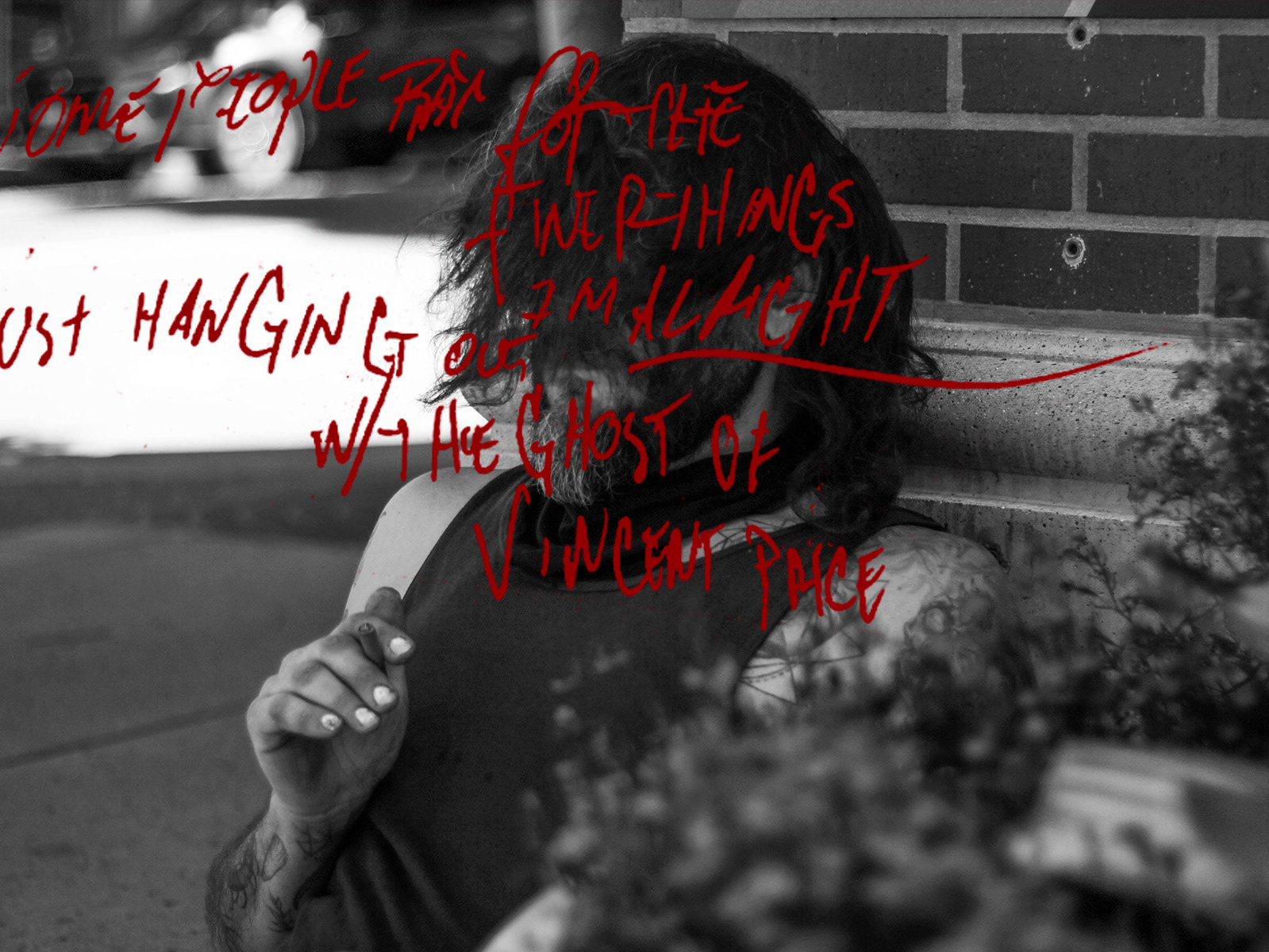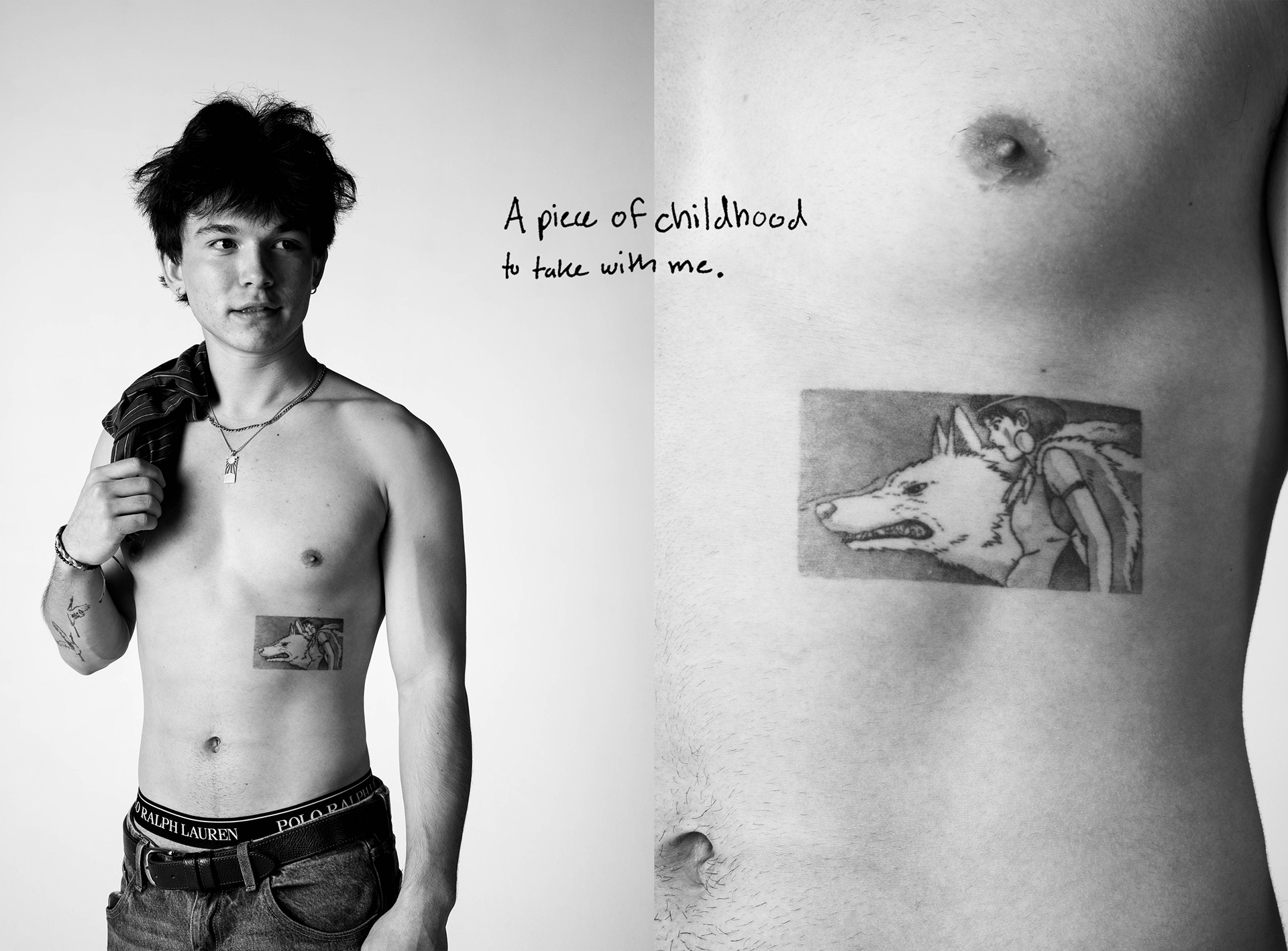
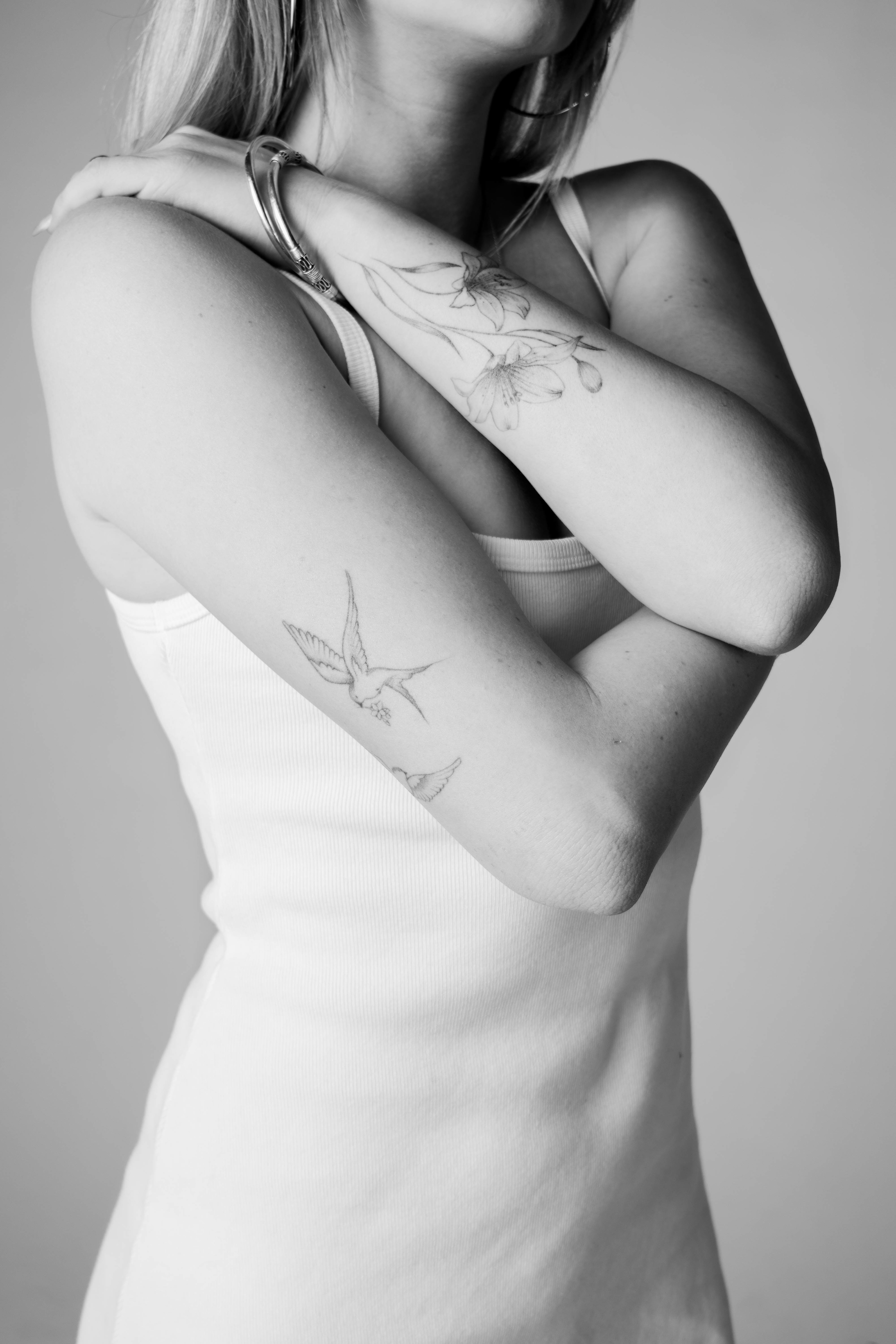
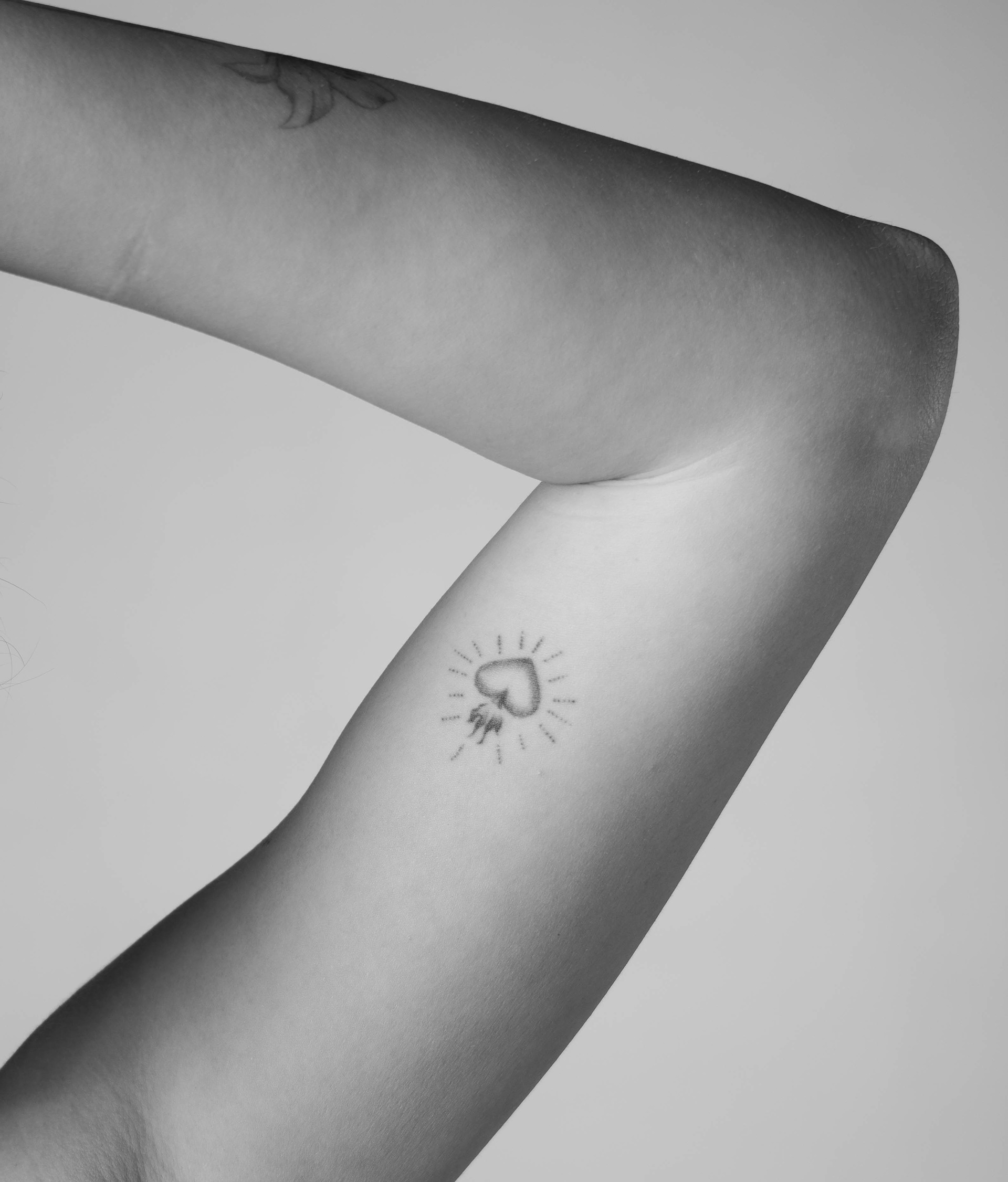
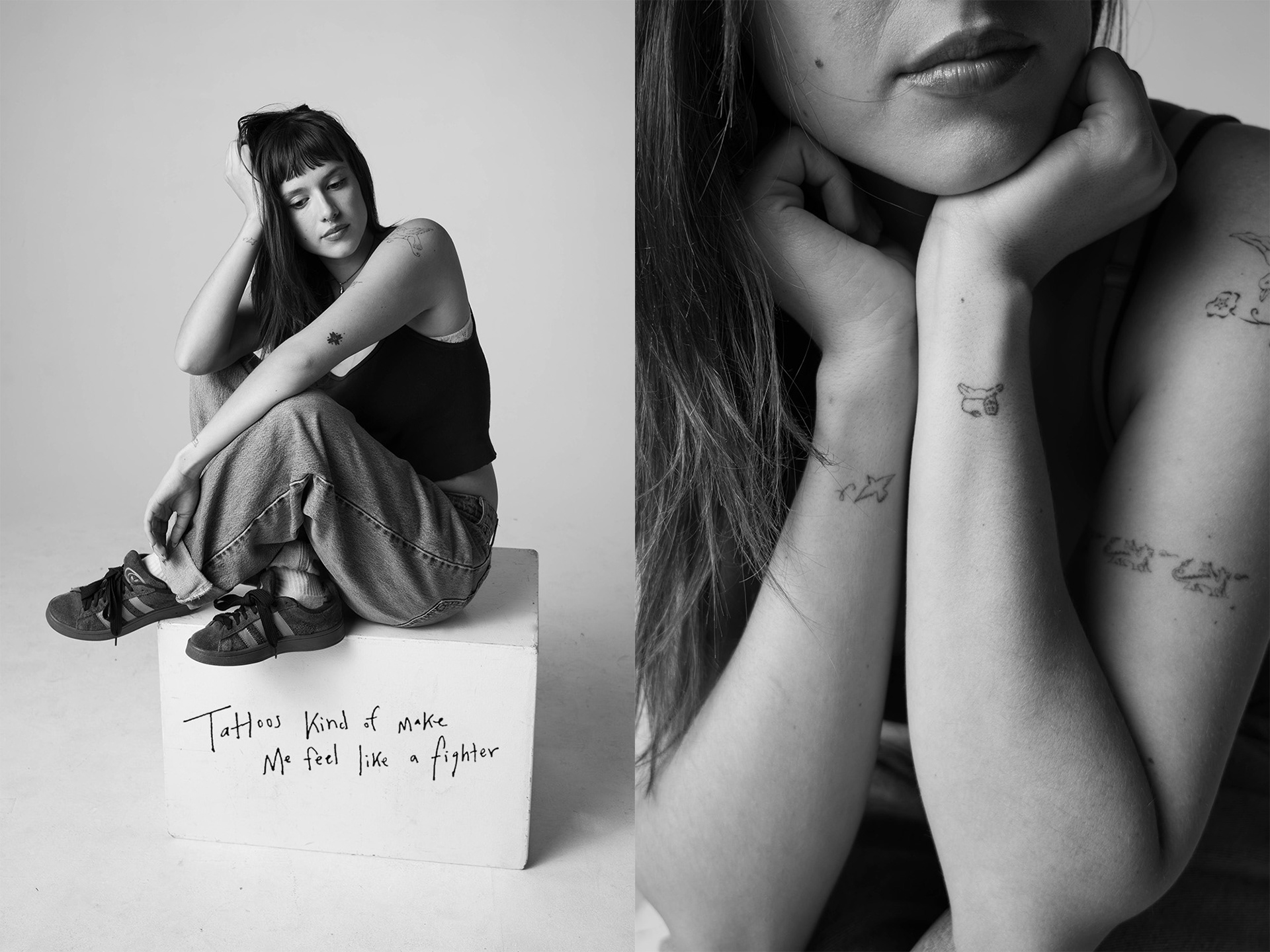
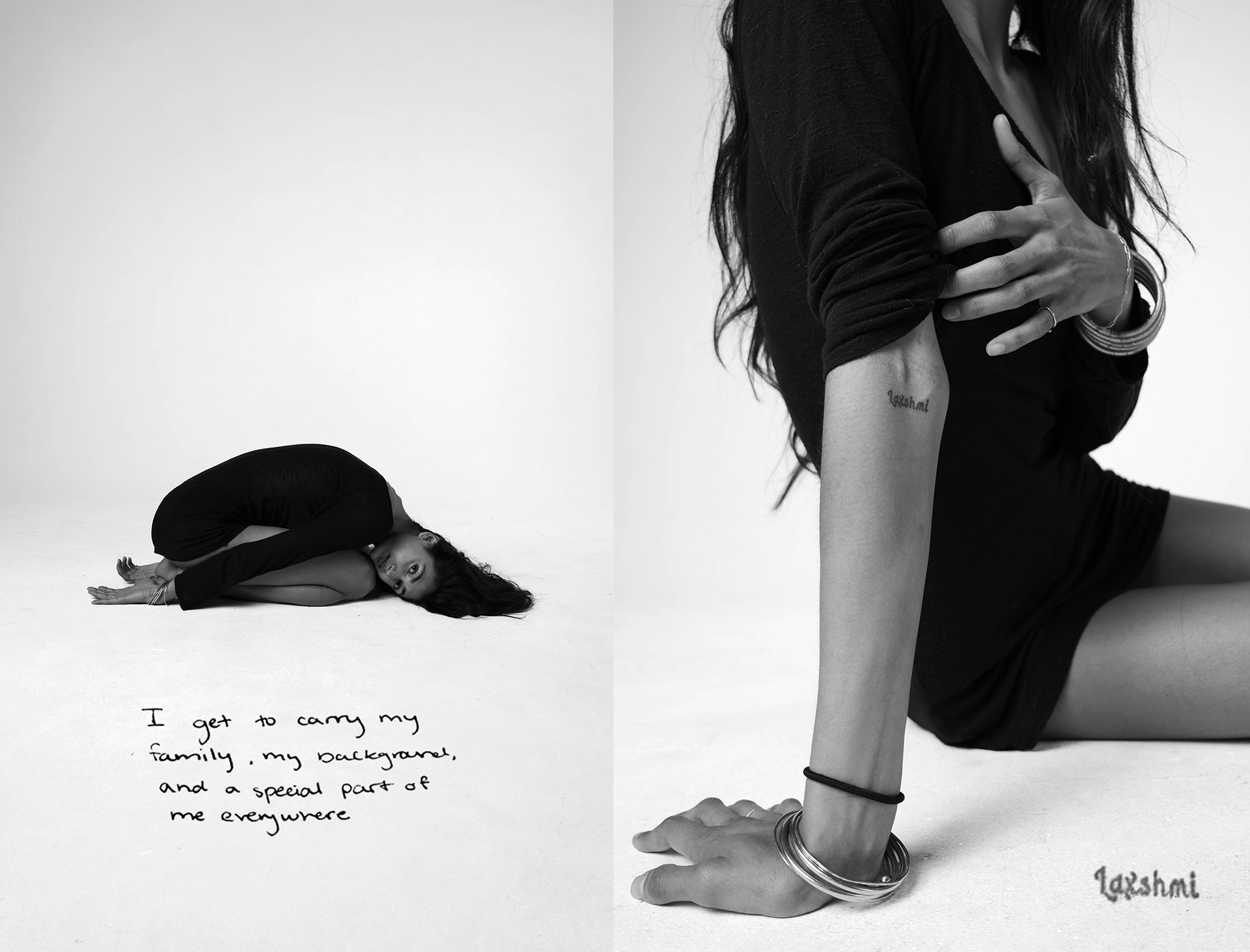
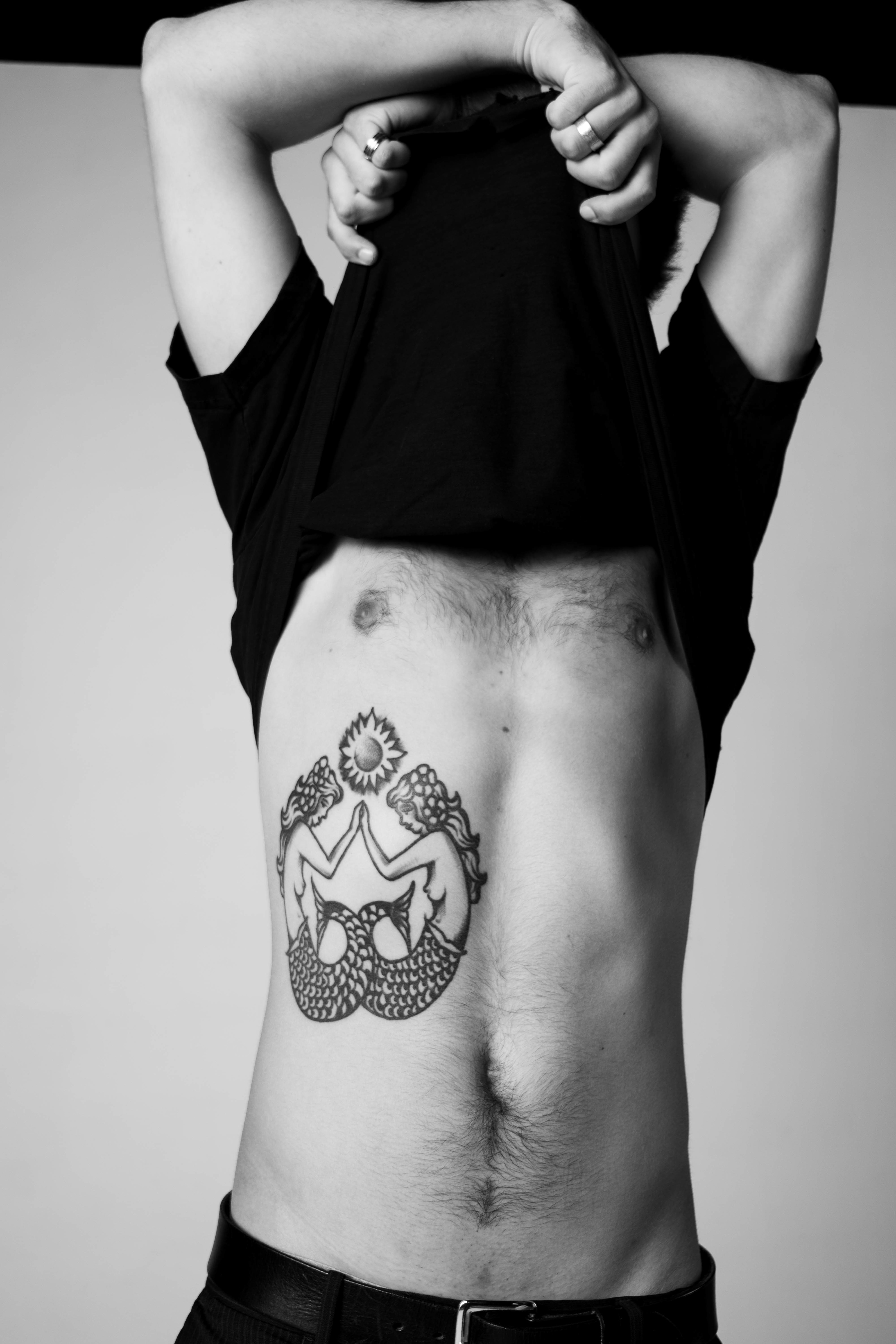
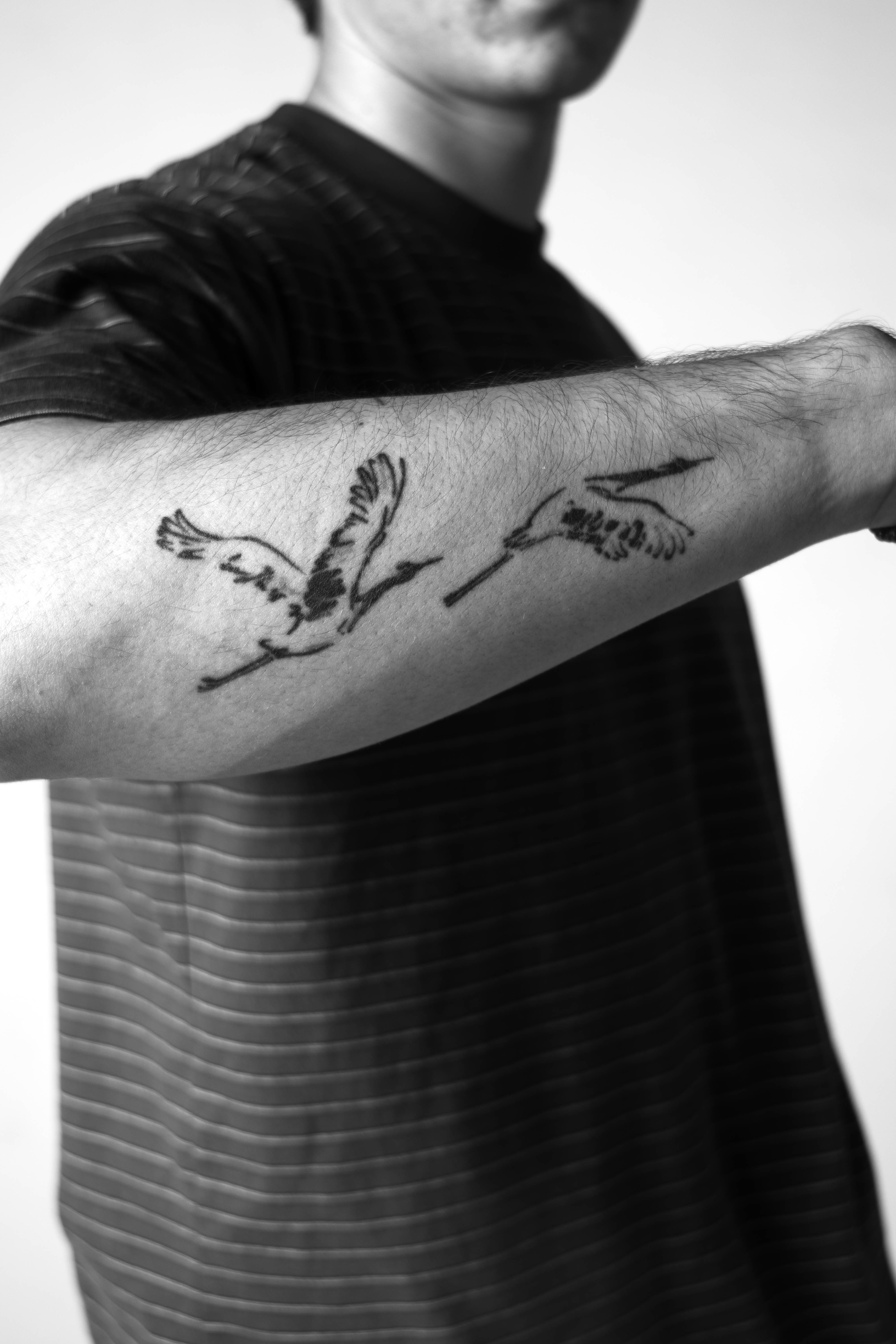
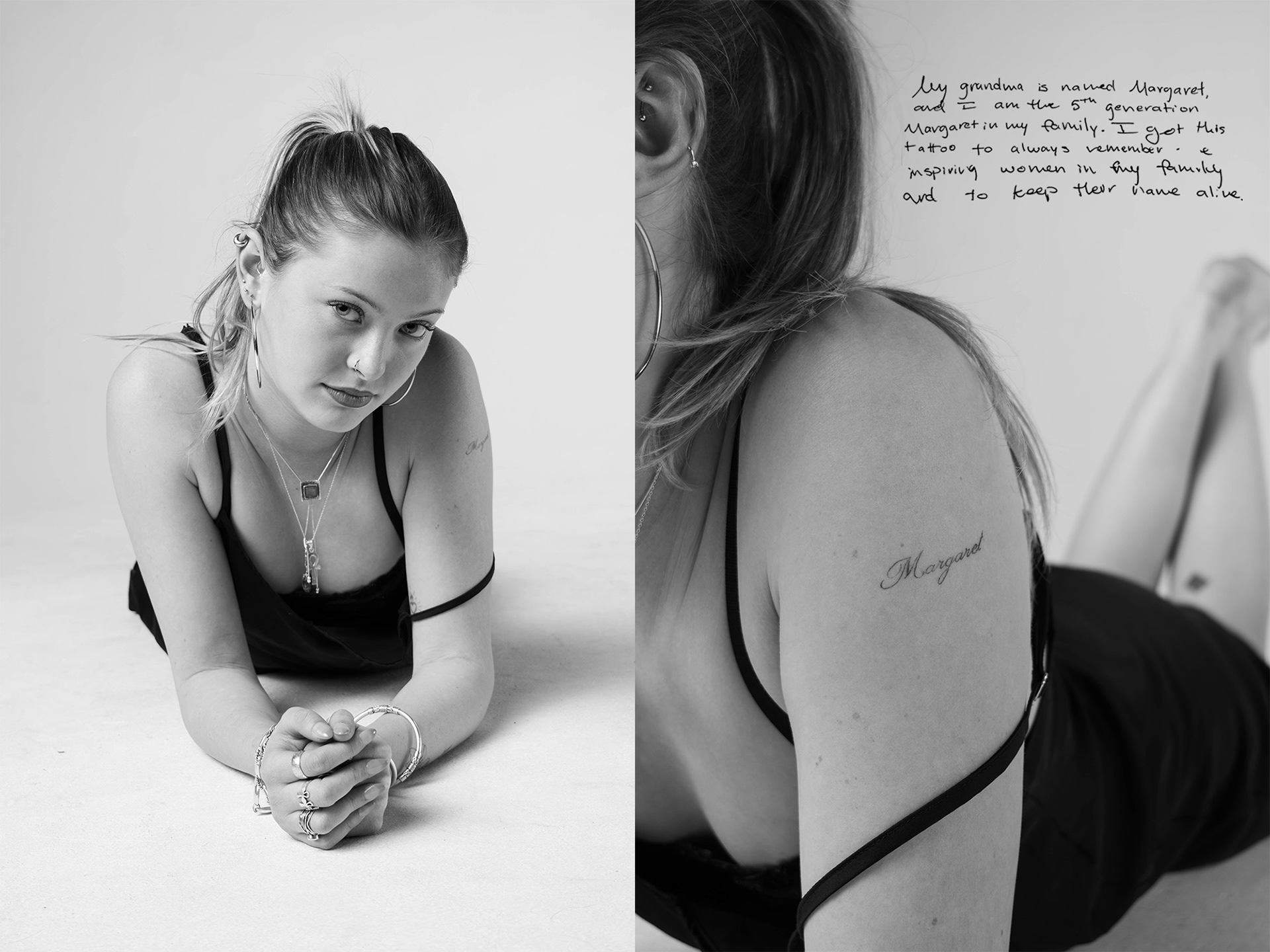
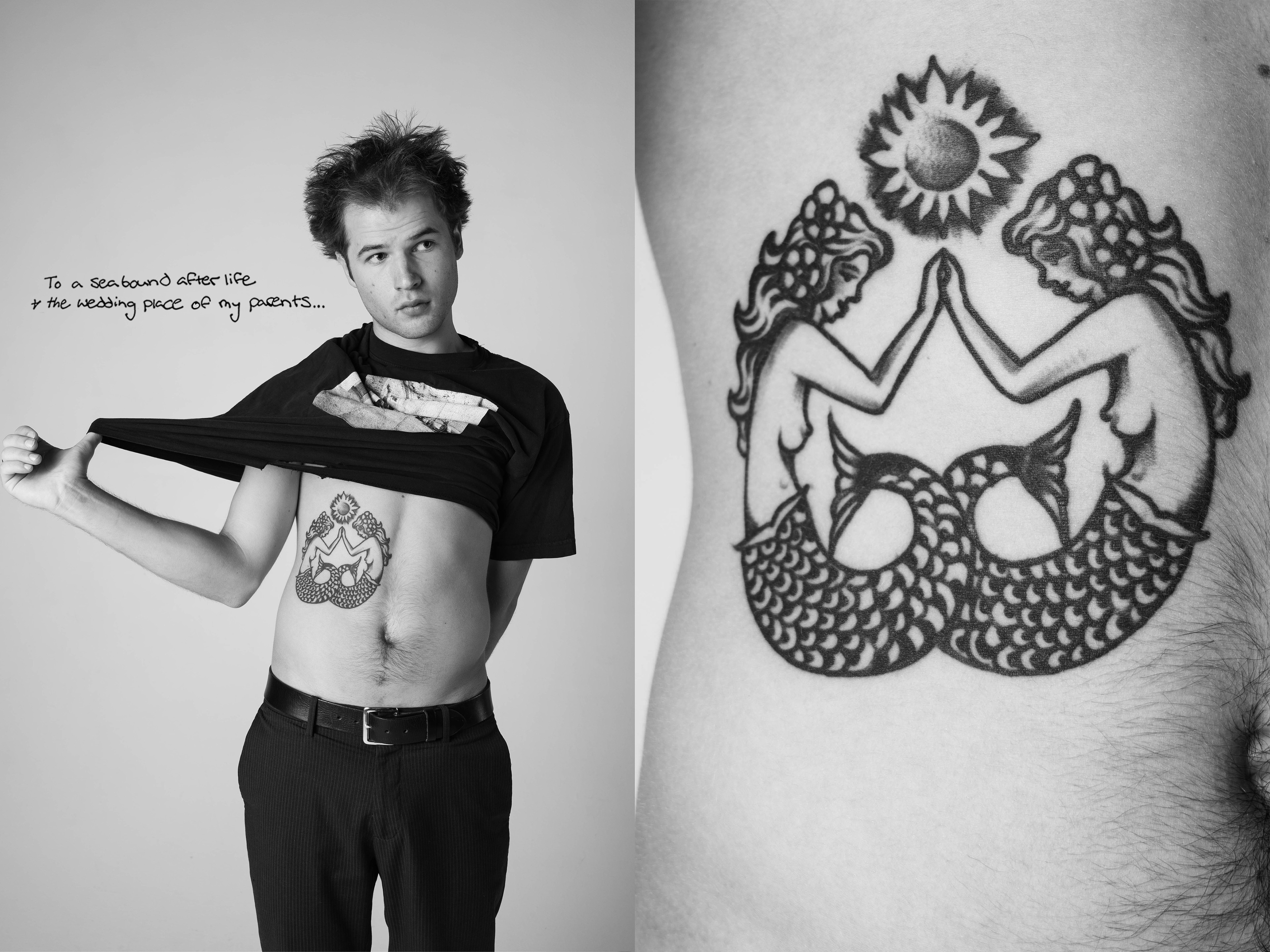
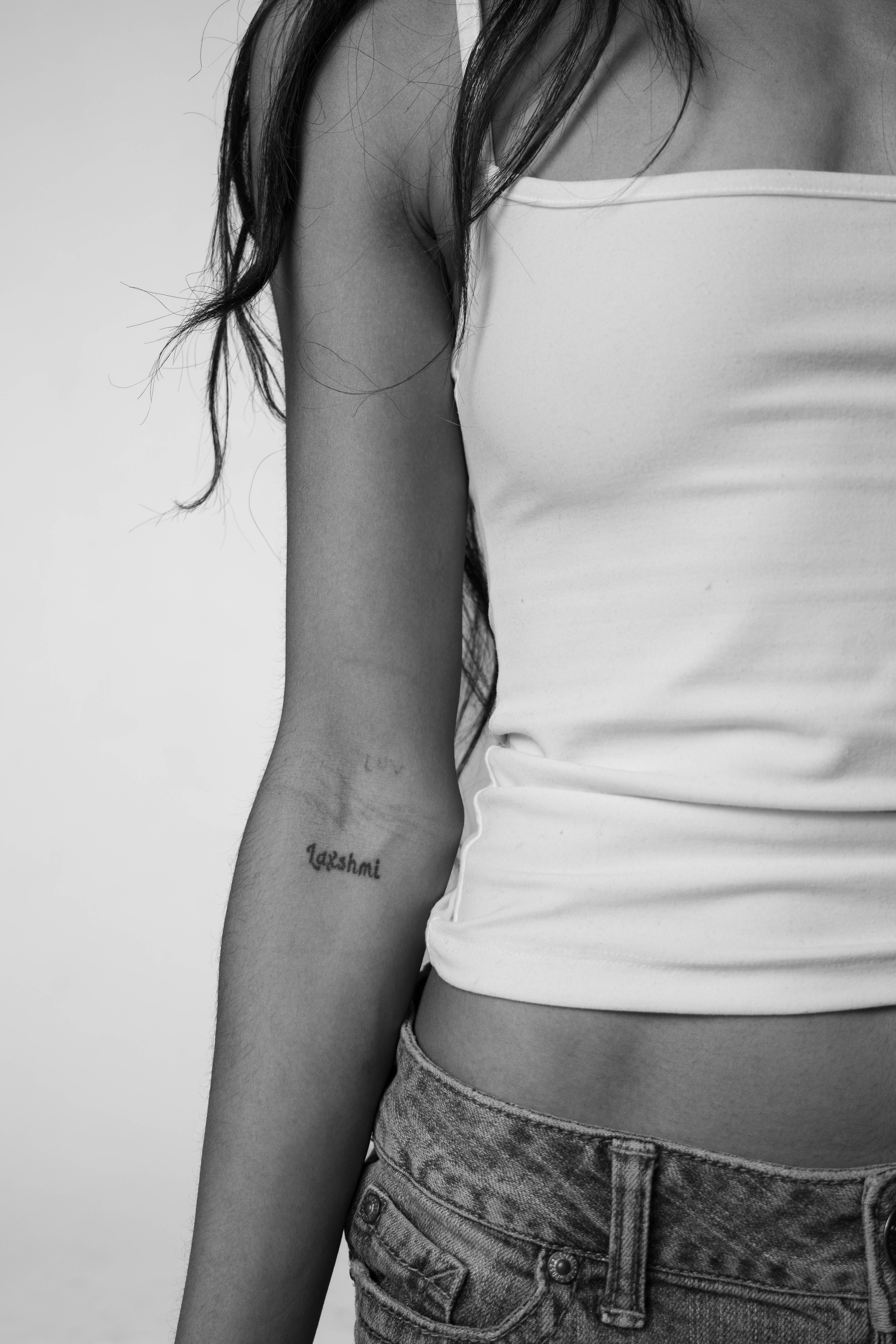
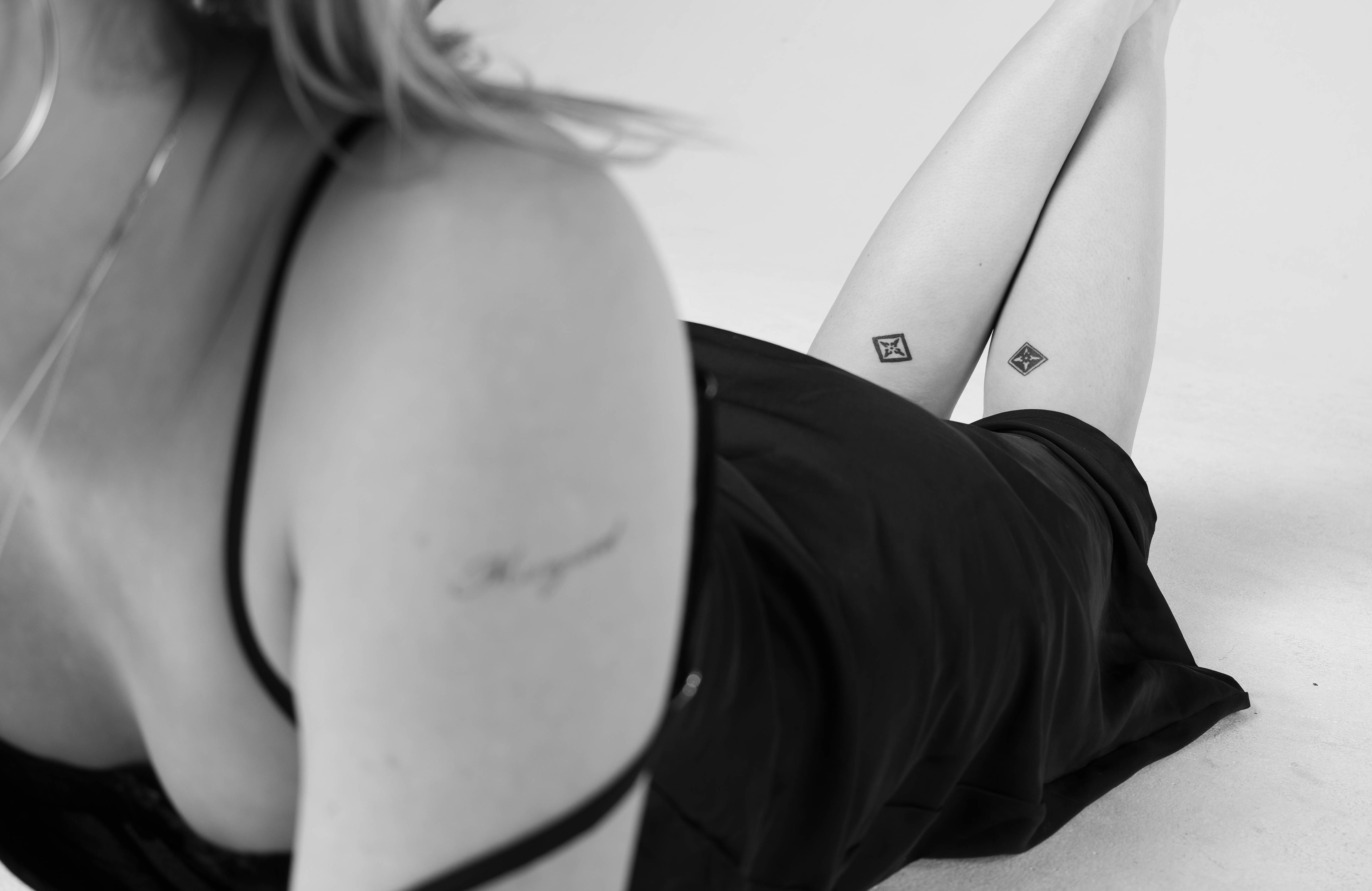
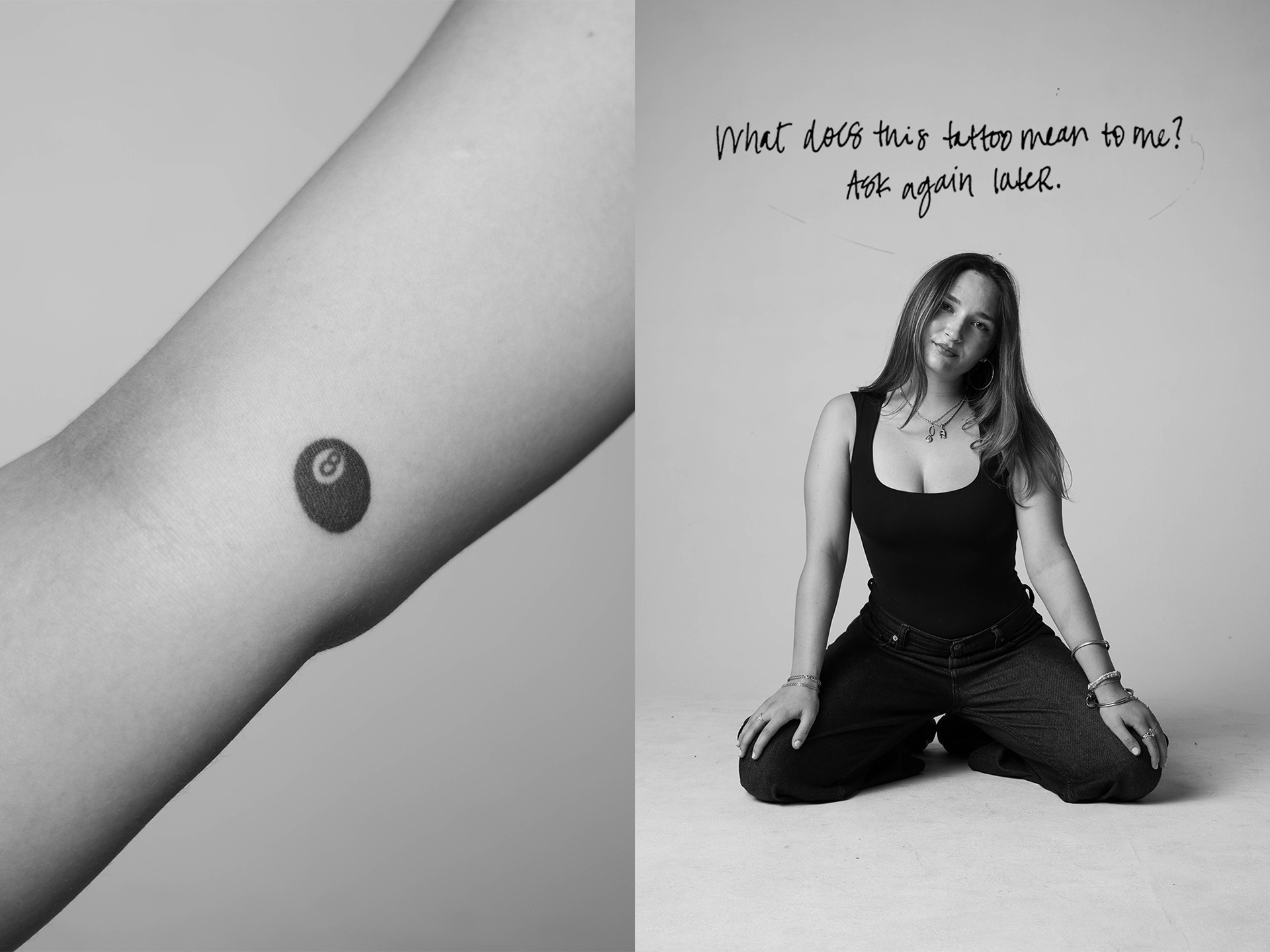
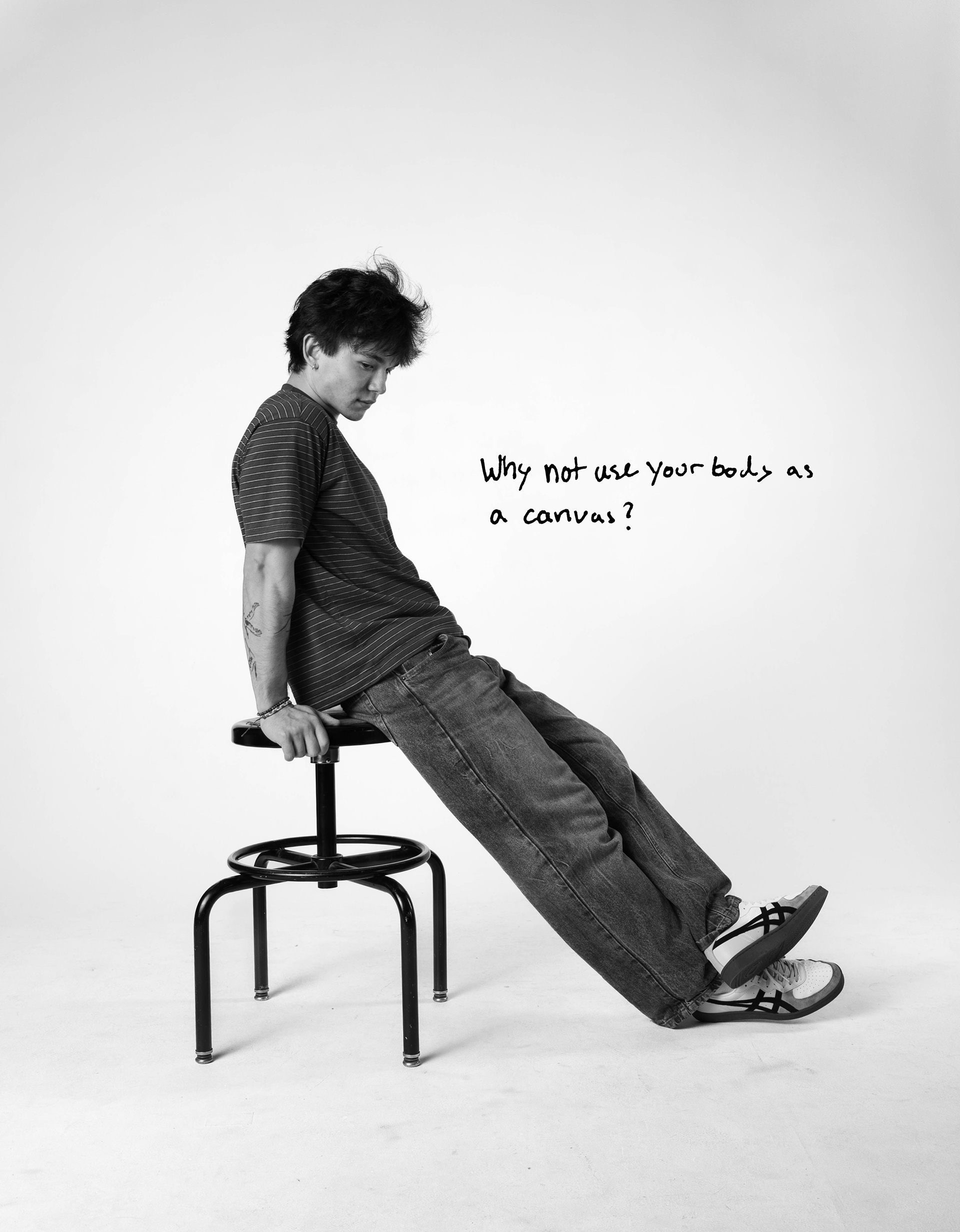
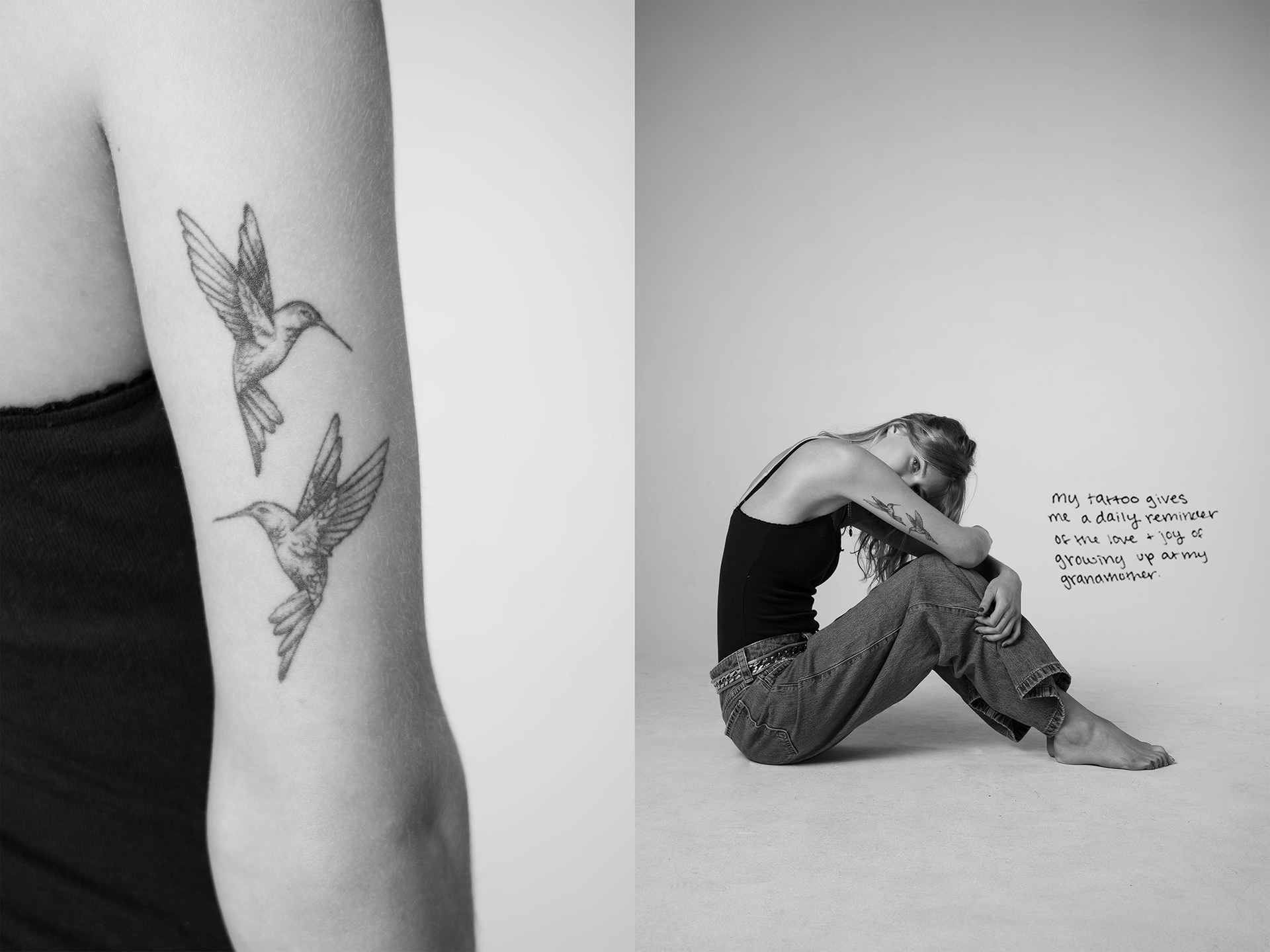
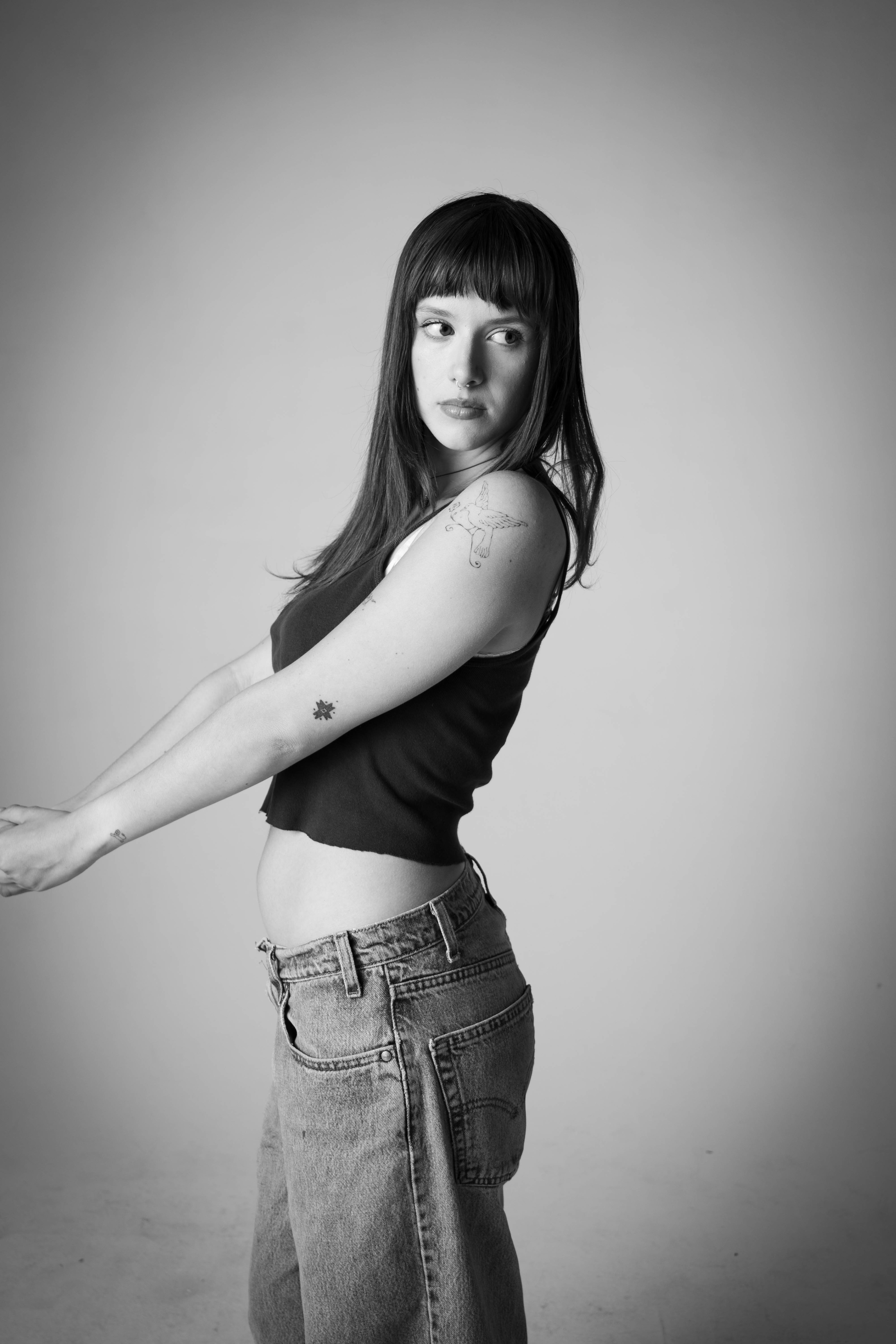
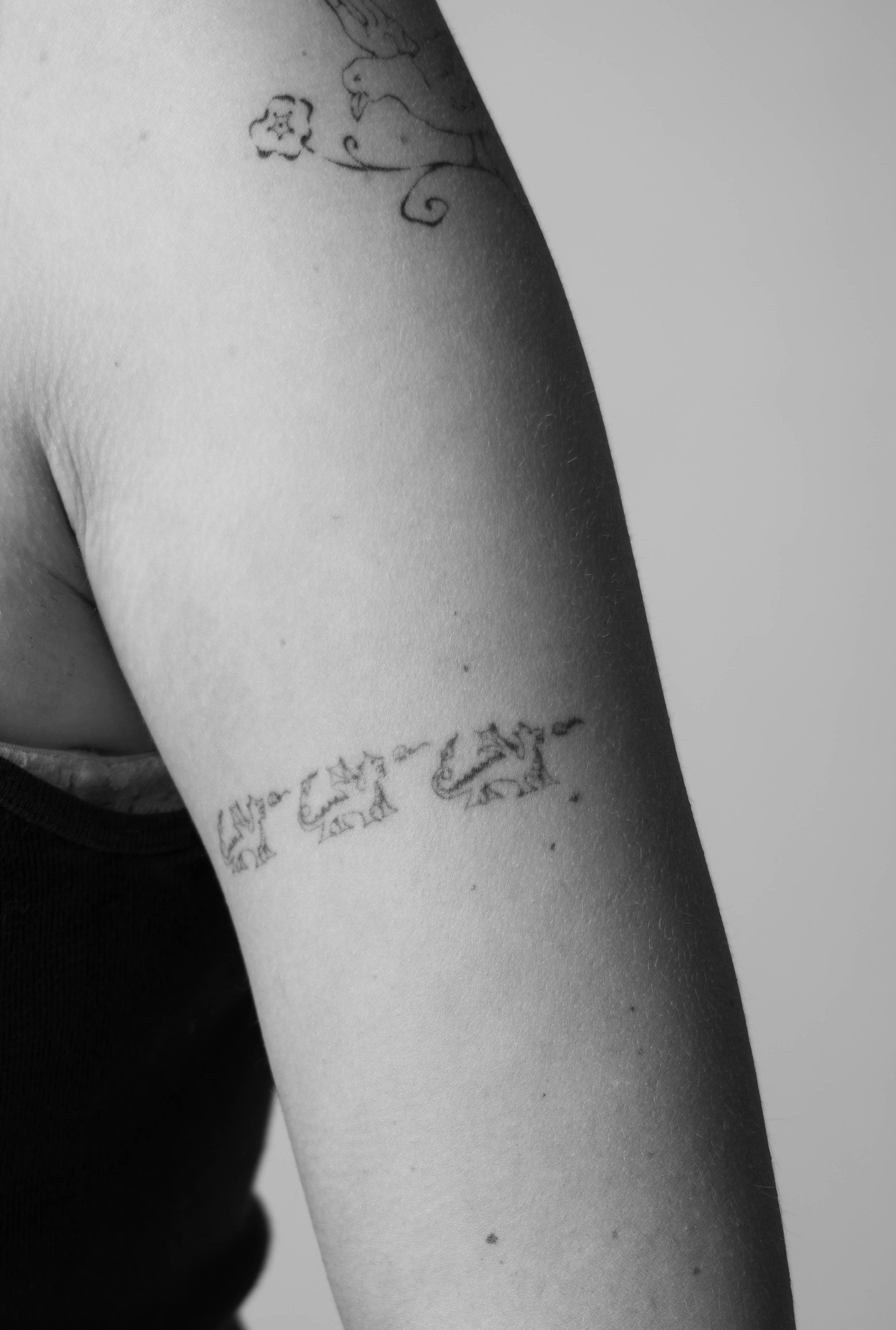
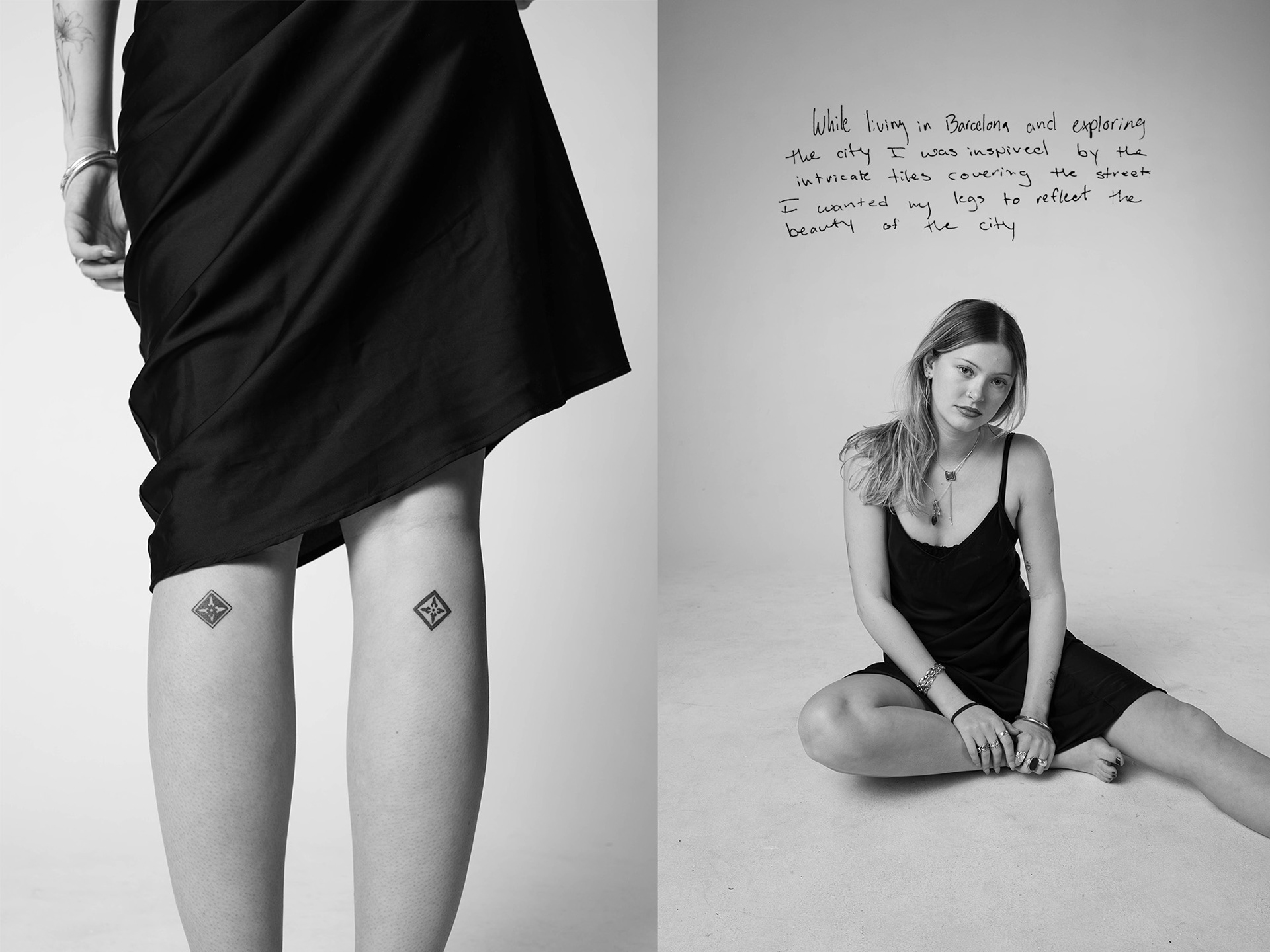
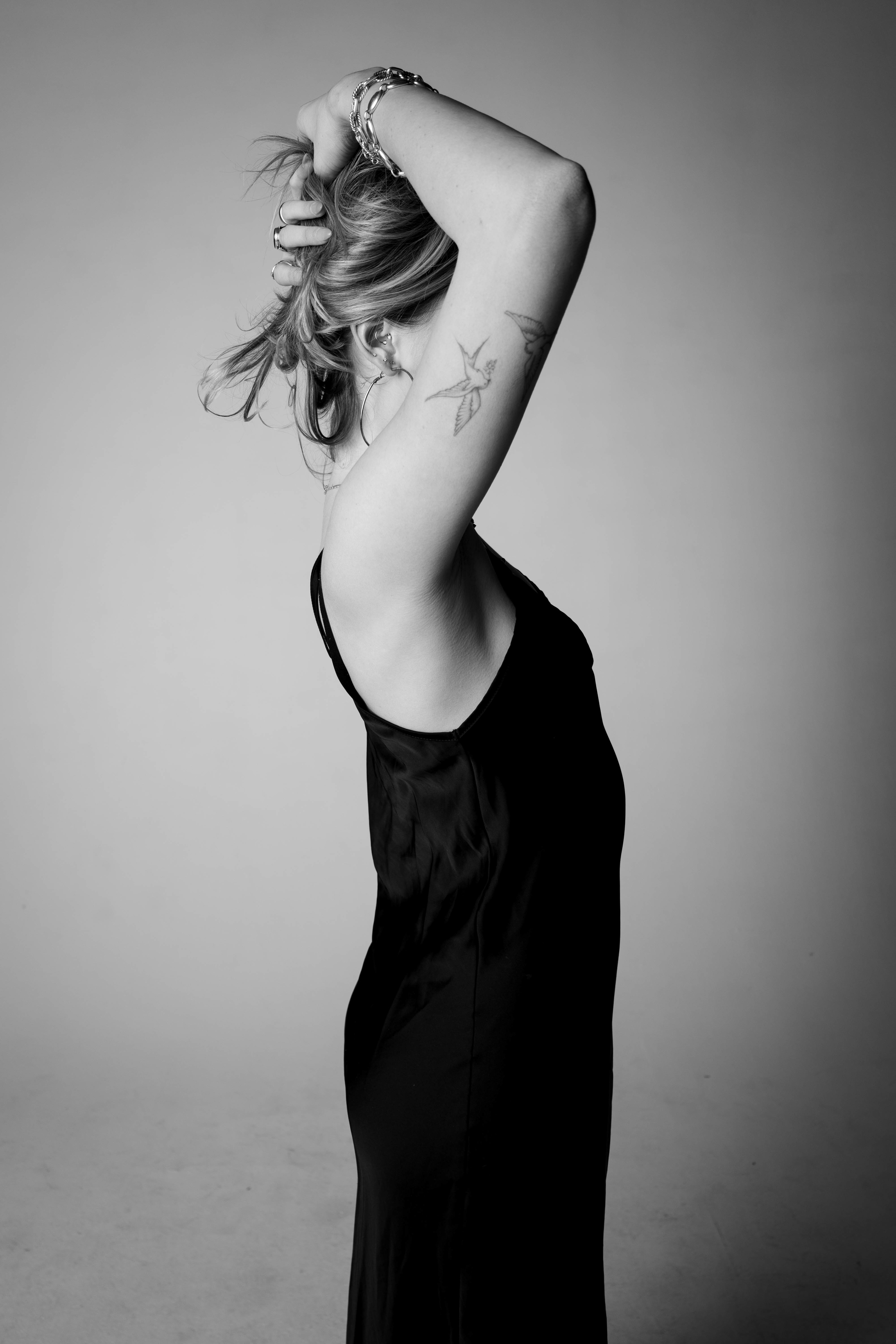
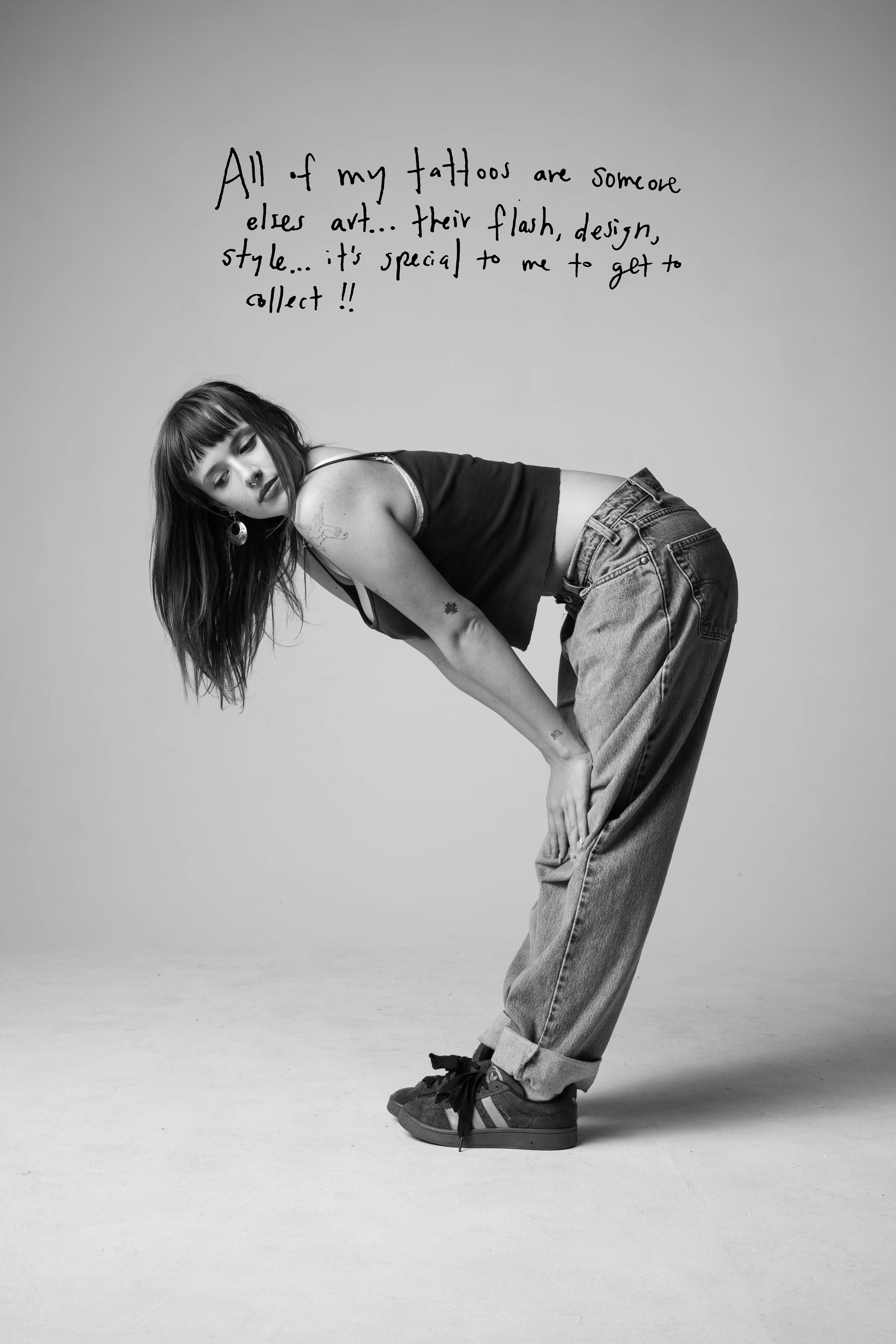
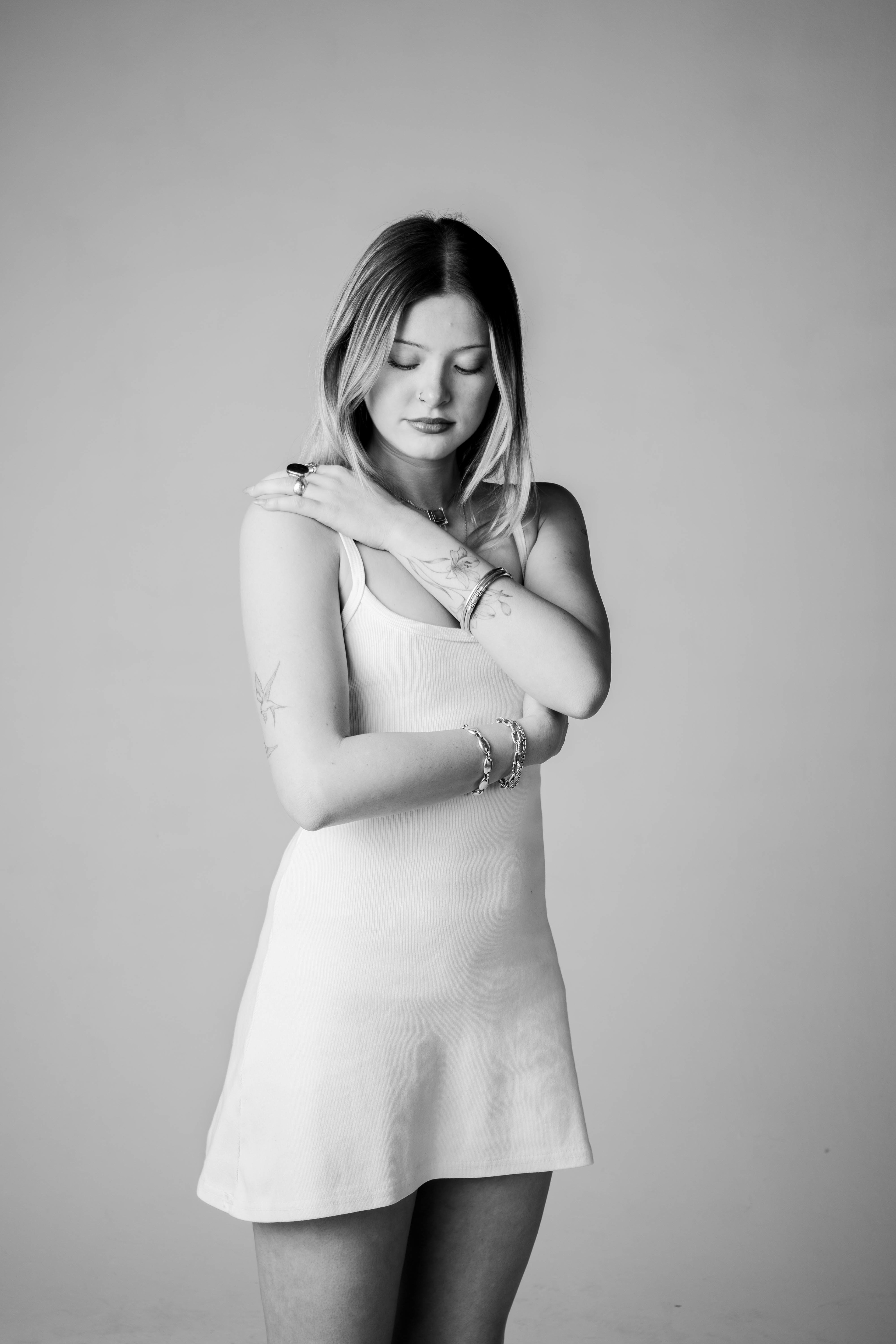
When I look at my own skin, I often think about how much of a record it already holds. Smooth in some places, wrinkled or marked in others, it carries evidence of time passing: smile lines from joy, scars from moments that taught me to be more careful. In many ways, our bodies are already canvases, shaped by experiences we don’t always choose. Tattoos feel different. They are deliberate marks, decisions made permanent. They remind us of who we were at a specific moment: testing new-found freedom during the first week of college, a memoir from a favorite film, a symbol of love for a mother, or simply something that once felt aesthetically pleasing. Some of my tattoos hold clear meaning; others exist without the need for explanation. All of them are reminders that our choices themselves play a significant role in constructing our identities. This project grew from my curiosity about that decision-making. I wanted to understand why others choose to mark themselves. To look at the moments people decide to leave something behind on their skin, to honor memory, impulse, love, or nothing at all. How do these marks of choice live on with us long after the moment that created them has passed? In addition, the accompanying text, handwritten by the subjects themselves, serves as a reminder of human presence and individuality behind each portrait, preserving their voices and intentions. This was not something I felt I could explain or translate for the viewer; tattoos can be personal enough that the subject’s words should remain unaltered. The result is not a single narrative, but a collection of lived moments made tangible and visible. These tattoos are not meant to be decoded or justified; they merely exist as evidence of a choice the subject has made, and the handwriting, another moment in time. In preserving both the tattoo and the voice behind it, this project displays how our bodies can become an archive of a moment, much like a piece of art.